

BioWorks adds copper fungicide and insecticidal soap to crop protection portfolio


BioWorks has introduced two new crop protection products, Sandrine Copper Soap and Cintro Insecticidal Soap, expanding its portfolio of tools aimed at integrated pest management (IPM) programs in greenhouse, nursery, ornamental, and specialty crop systems.
The launches come as growers face rising disease and insect pressure alongside tighter regulatory and residue requirements. Both products are positioned for use in commercial production systems where short re-entry intervals and compatibility with biological controls are operational priorities.
Broad-spectrum copper fungicide
Sandrine Copper Soap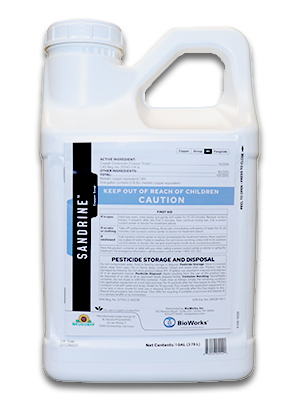 is a liquid formulation based on copper octanoate, designed to control a range of fungal and bacterial diseases. According to product data, target pathogens include bacterial leaf spots, botrytis, corynespora, downy mildew, and powdery mildew.
The product combines two modes of action. Copper provides preventative protection by forming a surface barrier that inhibits spore germination, while the fatty-acid component enables the active ingredient to penetrate infected tissue and disrupt pathogen cell membranes. The formulation contains a metallic copper equivalent of 1.8%, lower than many traditional copper products, a feature intended to reduce the risk of crop injury.
Sandrine is labeled for indoor use on crops including cucumbers, melons, ornamentals, roses, strawberries, tomatoes, and other vegetables. It carries a four-hour re-entry interval (REI) and a zero-day pre-harvest interval (PHI), allowing for rapid return to treated areas.
Company trial summaries indicate that in peach orchards affected by bacterial spot, Sandrine reduced disease incidence by 55%, compared with 30–40% for competing products. In tomato trials targeting Alternaria solani, control levels were reported at 95%, versus 85% for alternatives.
Contact insect control for soft-bodied pests
Cintro Insecticidal Soap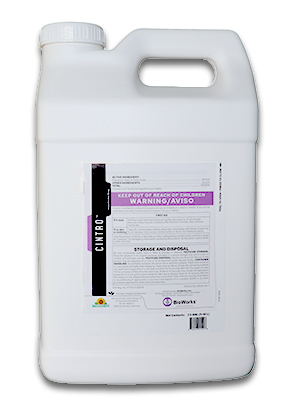 is formulated from potassium salts of fatty acids and provides contact-based control of soft-bodied insects and mites. Target pests include aphids, leafhoppers, mealybugs, spider mites, thrips, and whiteflies.
The product acts by dissolving the insect’s protective outer cuticle and disrupting cell membranes, leading to rapid mortality on contact. Because it leaves no residual activity after application, it is designed to be compatible with beneficial insects once spray residues have dried.
Cintro is labeled for indoor and outdoor use across a wide range of crops, including bedding plants, trees and shrubs, citrus and stone fruit, nuts, herbs, vegetables, and other specialty crops. It has a 12-hour REI and a zero-day PHI.
In company-reported trials, Cintro achieved a 96% mortality rate against diamondback moth larvae, compared with 10% for a horticultural oil treatment. In two-spotted spider mite trials, control was reported at 92%, versus 82% for a competing insecticidal soap.
Availability and regulatory status
Both products are currently available through authorized BioWorks distributors in more than 20 US states, including Ohio, Pennsylvania, Virginia, Wisconsin, and Georgia. Registration is pending in California.
Sandrine is registered with the US Environmental Protection Agency under Reg. No. 67702-2-68539, while Cintro is registered under Reg. No. 67702-11-68539.
The additions reflect BioWorks’ strategy to broaden its portfolio beyond biological controls into complementary crop protection inputs that fit within IPM programs, as growers increasingly seek flexible tools that balance efficacy, worker safety, and regulatory compliance.

Enjoyed this story?
Every Monday, our subscribers get their hands on a digest of the most trending agriculture news. You can join them too!






Discussion0 comments