

Israeli researchers aim to halve pesticide use with a new coating technology

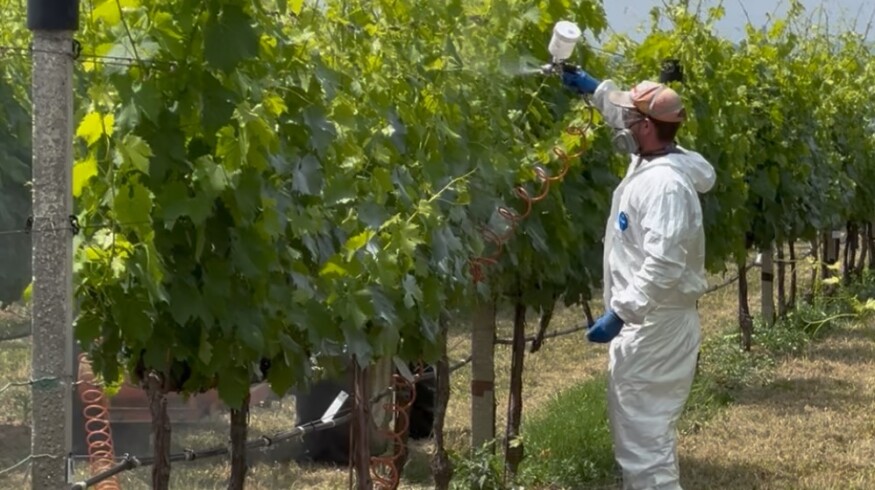
Israeli researchers have developed a biodegradable crop coating that could reduce the use of chemical pesticides by more than 50%, offering a potential breakthrough in sustainable agriculture amid mounting pressure from climate change and rising disease resistance.
The technology, known as SafeWax, was developed at the Technion–Israel Institute of Technology and detailed in a recent study published in the journal Small. The research was led by Dr. Iryna Polishchuk of the Department of Materials Science and Engineering and coordinated by Prof. Boaz Pokroy, with funding from the European Union’s EIC Pathfinder program.
SafeWax is a sprayable, plant-based coating that forms a thin, water-repellent layer on crops. The coating prevents fungal spores from germinating while allowing plants to carry out normal physiological processes such as photosynthesis. According to the researchers, the approach could significantly reduce dependence on conventional fungicides, which often wash into soil and waterways and contribute to biodiversity loss.
“SafeWax offers a promising, sustainable alternative to pesticide use,” Pokroy said. “It passively protects plants from disease without harming the environment or human health.”
The coating mimics the natural waxy cuticle found on plant leaves, such as those of lotus plants, which repel water and contaminants. Made from biodegradable fatty acids derived from food waste, the material is transparent to visible light and filters harmful ultraviolet radiation. Researchers say this helps protect crops from heat stress and dehydration while maintaining growth.
Tests conducted on tomatoes, peppers, grapevines, and bamboo showed that the coating effectively reduced fungal infections without interfering with photosynthesis. The team estimates that widespread use of SafeWax could cut pesticide use by more than half.
Fungal diseases are responsible for destroying roughly one-third of global crop yields each year, causing economic losses estimated at more than $70 billion. The problem is worsening as climate change accelerates the spread of pathogens and increases crop stress, particularly in regions such as the Mediterranean.
Viticulture is among the most vulnerable sectors, with rising temperatures threatening grape quality and long-term wine production. Pokroy noted that climate pressures could soon make it difficult to produce certain wine varieties, including Chardonnay, in traditional growing regions.
While SafeWax is not designed to combat insects, researchers are exploring related technologies for pest control. Several challenges remain before commercialization, including scaling production, securing raw materials, and ensuring cost competitiveness. The coating also requires periodic reapplication as plants grow.

Enjoyed this story?
Every Monday, our subscribers get their hands on a digest of the most trending agriculture news. You can join them too!






Discussion0 comments