

Brazil’s first arid zone emerges in the northeast, raising alarms over climate risks nationwide

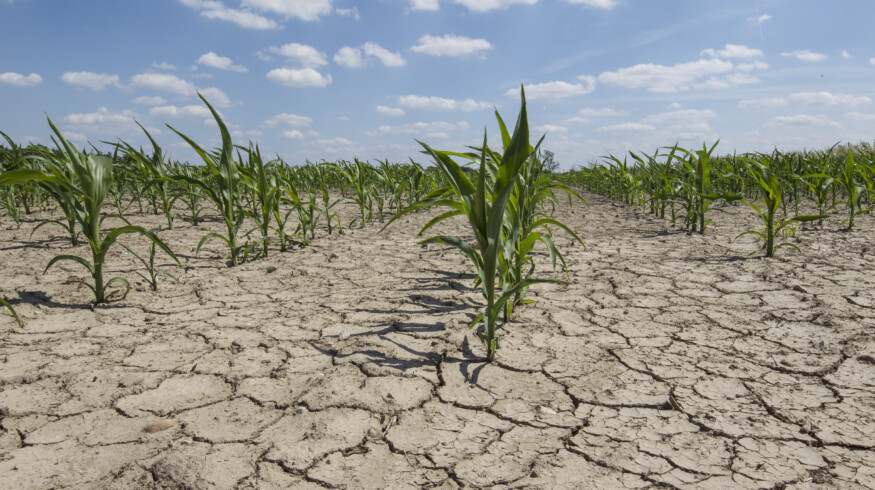
A stretch of Brazil’s northeast has become the country’s first officially recognized arid zone, underscoring how climate change is reshaping livelihoods in one of its poorest regions and signaling broader risks for the nation, according to researchers and local officials.
The designation applies to a 5,700-square-kilometer area spanning Macururé and four neighboring municipalities in northern Bahia state. A 2023 study found that sustained declines in rainfall combined with higher temperatures had pushed the region from semi-arid to arid conditions, a shift that has taken place within a single generation.
For residents such as Raildon Suplício Maia, a 54-year-old goat farmer in Macururé, the change is felt daily. Goats, the backbone of the local economy, now struggle to find forage as native vegetation in the Caatinga biome withers. “It used to rain earlier,” Maia said. “Now there are no cacti, no grass, and not enough water. We spend what we earn on feed.”
Ana Martins do Amaral Cunha, a researcher at Brazil’s National Center for Monitoring and Early Warning of Natural Disasters (Cemaden) and a co-author of the study, said the finding marks a historic shift. “We never previously had an arid zone in Brazil,” she said. “This is an area where the climate changed from semi-arid to arid. That means it got hotter and drier.” She added that rising temperatures are linked to anthropogenic global warming.
The researchers analyzed rainfall and evapotranspiration data across overlapping 30-year periods from 1960 to 2020. In the newly classified arid zone, average annual rainfall fell below 400 millimeters between 1990 and 2020. The study warns that the shift could accelerate desertification, which already threatens about 13% of the Caatinga if soil degradation driven largely by human activity is not addressed.
While residents may not be aware of the technical reclassification, they are acutely aware of its effects. Subsistence crops such as corn and beans have largely failed, forcing households to spend more on food and animal feed. “We used to grow everything,” Maia said. “Now, when you plant something, it dies.”
Water scarcity has long defined life in the sertão, and communities rely on infrastructure such as artesian wells, cisterns, and reservoirs supplied by government programs. In recent years, some families have received rainwater-harvesting trenches designed to reduce evaporation and store hundreds of thousands of liters of water. Yet officials say these measures are increasingly strained by longer and hotter dry seasons.
“You no longer know how long the water will last,” said Gustavo Vieira, Macururé’s municipal secretary for agriculture, environment, and livestock. “The sources empty more quickly because it’s hotter.”
Macururé, home to just over 7,000 people, lost about 10% of its population between 2010 and 2022 as younger residents left in search of work. Cemaden’s research suggests the problem is not confined to the northeast: Brazil’s semi-arid region expanded by roughly 75,000 square kilometers per decade from 1960 to 2020, and new dry subhumid areas have emerged in parts of Rio de Janeiro state and the Pantanal wetlands.
“These changes are not just a northeastern problem,” Cunha said. “They affect the whole country.” She added that once a climatic shift of this kind occurs, it is effectively irreversible, making mitigation and anti-desertification policies essential. The environment ministry, which commissioned the study, is expected to present an updated national policy to combat desertification in the coming months.
Local officials say attention and resources have historically flowed more readily to the Amazon, leaving the Caatinga overlooked. Efforts to diversify local economies through alternatives such as ecotourism or carbon credits remain uncertain. For many residents, abandoning traditional livelihoods is unthinkable.
“The day I stop breeding goats,” said Venancio Lorenzo do Santo, a 53-year-old farmer, “I know I’ll have to leave.”

Enjoyed this story?
Every Monday, our subscribers get their hands on a digest of the most trending agriculture news. You can join them too!






Discussion0 comments