

Ancient Organics patents microbial solution to detoxify glyphosate


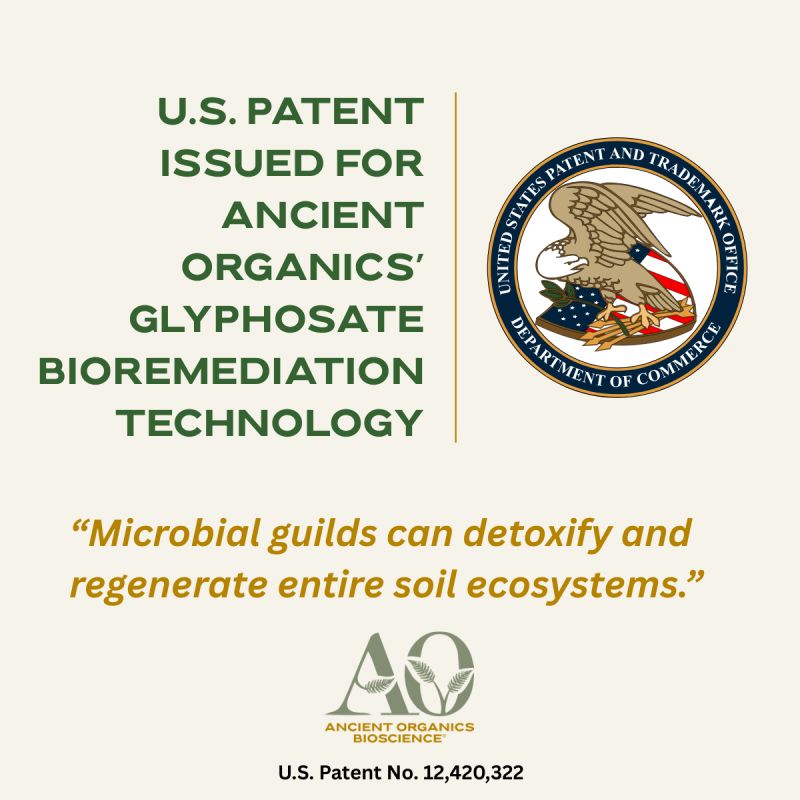
Ancient Organics Biosciences has secured US Patent No. 12,420,322 for its microbial technology designed to neutralize glyphosate and rebuild soil ecosystems. The patent covers the company’s flagship product, PaleoPower, and other microbial consortia engineered to break down glyphosate and its byproduct AMPA while restoring soil microbial diversity.
Multi-state field trials indicate the product can remove glyphosate residues by up to 96% in a California vineyard, 87% in a Wisconsin corn field, 75% in Alabama cotton, and 50% in Illinois soybeans. The reductions corresponded with yield gains: 28.6% in corn, 38% in carrots, 48% in onions, and 25–36% across organic vegetable crops.
By supporting soil microbial activity and releasing nutrients bound by glyphosate, PaleoPower could help farmers reduce chemical inputs and increase productivity—potentially significant amid input costs that have risen 25–45% in recent years.
A Different Approach to Microbial Solutions
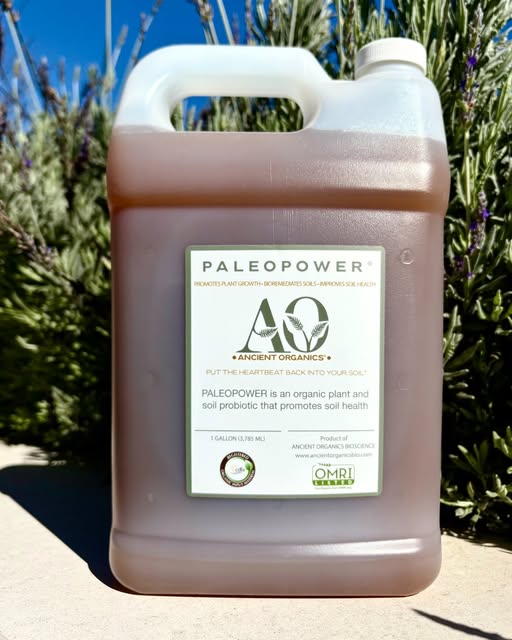
Unlike conventional microbial products, which often rely on single strains, Ancient Organics develops microbial consortia—communities of microbes designed to work together. The company uses genomic sequencing and metabolic modeling to select strains with complementary functions, such as nitrogen fixation, phosphate solubilization, and toxin breakdown. Formulations also include a nutritional matrix intended to support microbial establishment and persistence in soil.
Dr. Raul Cano, founder and CEO of Ancient Organics, said the patent “validates our systems-biology approach. With carefully designed microbial guilds, we can detoxify and regenerate entire soil ecosystems.” Dr. Don Huber, professor emeritus at Purdue University, called PaleoPower “a biological antidote to one of agriculture’s greatest challenges.”
PaleoPoweris now available through authorized distributors across North America. The product has been applied on more than 50,000 acres and over 25 crop types.
For agribusiness professionals, the technology highlights trends in regenerative agriculture, including efforts to mitigate herbicide residues, improve nutrient cycling, and manage rising input costs.

Enjoyed this story?
Every Monday, our subscribers get their hands on a digest of the most trending agriculture news. You can join them too!






Discussion0 comments