

Syngenta’s Jeff Rowe: ‘We want to become the most profitable agrochemical company in the world’


Agrochemical company Syngenta remains at the forefront of the global agricultural industry as an innovator in seed development and crop protection, including herbicides, fungicides, and insecticides. Its products enable farmers to boost crop yields and enhance the sustainability of agricultural production through advanced solutions and precision farming technologies.
In a recent interview with Neue Zürcher Zeitung, Syngenta Group CEO Jeff Rowe discussed how the company addresses key challenges facing the agro-industrial sector and commented on the impact of the ongoing geopolitical tensions between the United States and China on Syngenta’s operations.
Q: Mr. Rowe, you’re an American, heading the world’s largest agrochemical company, which is based in Switzerland but was acquired by a Chinese state-owned company in 2016. This puts you on the front lines of the trade war between the US and China. Does this give you sleepless nights?
JR: I sleep well, but of course the geopolitical situation is challenging. There’s enormous uncertainty, and the environment is constantly changing. Sometimes everything looks promising, then things turn around. But what we must not forget is that China is the USA’s most important customer in agriculture. China imports more from the USA than from any other country. The two countries have strong common interests.
Q: How do tariffs affect your business?
JR: They represent an uncertainty we must prepare for. Our industry is highly seasonal. Many of the products currently used in the US were imported before the tariffs were introduced. Tariffs are constantly changing, and we don’t yet know how high they will be when the next wave of imports hits. But we are prepared. We began diversifying our supply chains a long time ago. In the US, too, we don’t have just one source for our products, but several.
Q: The Trump administration has cut funding to the government. How will this affect Syngenta?
JR: It takes much longer today for new products to be approved. It used to take a good two and a half years; now it’s around four. The longer approvals take, the less farmers benefit from innovations. The US needs a strong, science-based regulatory system. And that requires enough people to review applications. In countries like Argentina and Brazil, we see that approvals are granted more quickly.
Q: Syngenta faced severe price pressure in China last year. Is it possible to make money in a country whose agriculture has traditionally suffered from low productivity?
JR: Agricultural yields in China are, on average, about 40 percent lower than those in the US. If Chinese farmers want to increase their income, they need to improve their productivity. From a business perspective, this presents a significant opportunity for us: We can offer innovations that enable them to increase their productivity and thus their profitability, while also practicing more sustainable agriculture.
Q: Is it worth launching new products in China – or will they simply be copied?
JR: Intellectual property protection has improved significantly in China. We successfully launched our blockbuster fungicide product Adepidyn on the Chinese market. Chinese farmers are willing to pay more for it because it also makes economic sense for them.
Q: China acquired Syngenta in 2016 with the goal of helping develop the country’s underdeveloped agricultural sector. Have you been successful in solving that goal?
JR: We’re making good progress and operate agricultural centers in China that help farmers professionalize their practices – and not just with our products. A major problem in China is degraded soils caused by long-term mismanagement. We teach farmers how to farm more sustainably. This is part of our business model in China. The Chinese government explicitly supports this. We operate such centers not only in China, but also in Indonesia and other countries.
Q: Can Syngenta operate like a private company in China – or is the company more of a part of the state apparatus?
JR: We are clearly a private company in China, too. We were already operating there before Chem China acquired us. For us, China is a market like any other.
Q: Is Chinese ownership of Syngenta a problem in the US?
JR: Of course, the geopolitical situation between the US and China is tense. We’ve had isolated problems at the state level, for example, with tenders. But we maintain very good relations with most agricultural states and at the federal level.
Q: Are you losing orders in the US to Corteva, which is an American company?
JR: Farmers have known Syngenta for decades. Our employees are almost all American citizens, well-connected in their communities, and valued for their professionalism. On my own farm, I’m primarily interested in: Do the products work? And: Are the representatives honest? We’re doing well here—very well, in fact. Syngenta is a major player in US agriculture; we invest $430 million annually in research. Just two weeks ago, we opened a new biotech factory in South Carolina. The governor was also present.
Q: 2024 was a difficult year for Syngenta. The company lost sales, and margins were significantly lower than those of its competitors. What were the reasons for this?
JR: After an extremely strong upswing between 2020 and 2023, we experienced a significant correction. There were excessive inventories, especially in crop protection. As the largest company in this sector, we were more severely affected.
Q: You took over as CEO in early 2024. Why did you cancel your planned IPO shortly thereafter?
JR: Our performance simply wasn’t good enough for the IPO. We spent three years preparing. That’s a huge distraction for a team and a strain on the entire organization. When the market turned, we had to act quickly. Our costs had risen sharply. We cut around 4,000 jobs worldwide and exited several markets.
Q: Are you planning further reductions?
JR: No, the measures are already taking effect; we’ve initiated the turnaround. Cash flow was already almost three billion dollars by 2024. In the first quarter of this year, we achieved one of the best results in the entire industry. My goal is clear: We want to become the most profitable agrochemical company in the world.
Q: Why is this important for a company with a government owner?
JR: Because it’s the only way we can invest up to $2 billion annually in research and development and finance innovation. Furthermore, an IPO remains a strategic goal. When the time is right, we will submit a new application.
Q: How long do investors have to wait until the IPO?
JR: I can’t give a specific date. We’re just now focusing on further improving our business. A good quarter doesn’t necessarily make a good year.
Q: You’ve been busy cleaning up since you took office a year and a half ago. Are you now planning any acquisitions?
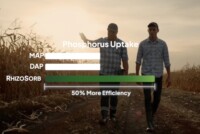
JR: Due to the difficult market situation, there have been few major mergers in our industry in recent years. However, we are making numerous smaller acquisitions. In California, we acquired a startup developing products for efficient nutrient utilization. And in Switzerland, we acquired Novartis’s archive for natural products and microbial strains, including a team of 20 researchers. We are also entering into many smaller partnerships with biotech companies.
Q: Switzerland has long been uninnovative in plant protection. What do you think about the latest legislative proposal that would allow gene scissors and other modern genetic breeding methods only under restrictive conditions?
JR: Technologies like gene scissors offer enormous opportunities for innovation in agriculture. If regulatory hurdles are so high that the technology is practically impossible to use, then that’s the wrong political decision. This is a problem for research in Switzerland, but not for Syngenta. We can also conduct our research in the United States, which is a major center for projects related to gene scissors.
Q: What makes gene scissors so promising in your opinion?
JR: To put it simply: plant breeding without genetic scissors is like searching for your keys in the dark. It’s difficult and time-consuming. Gene scissors, on the other hand, turn on the light, and you can search for your keys in a targeted manner.
Q: Where exactly does Syngenta apply gene scissors technology?
JR: For example, we’re testing tomatoes that have a longer shelf life. We know the genes that ensure longer shelf life and can use gene editing to specifically incorporate this trait. Gene editing is a great tool for supporting agricultural production and preventing food waste.
Q: There’s a lot of enthusiasm for organic farming in Switzerland. Are organic products problematic for global food security because they reduce the area available for conventional farming?
JR: Studies show that, depending on the type of grain or crop, organic farming yields 10 to 30 percent less than conventional farming. And if we simultaneously need around 40 percent higher yields by 2050 to feed the growing global population, then the math doesn’t add up. We can’t feed the world with organic farming alone.

Enjoyed this story?
Every Monday, our subscribers get their hands on a digest of the most trending agriculture news. You can join them too!




Discussion0 comments